 GOLDSNIPER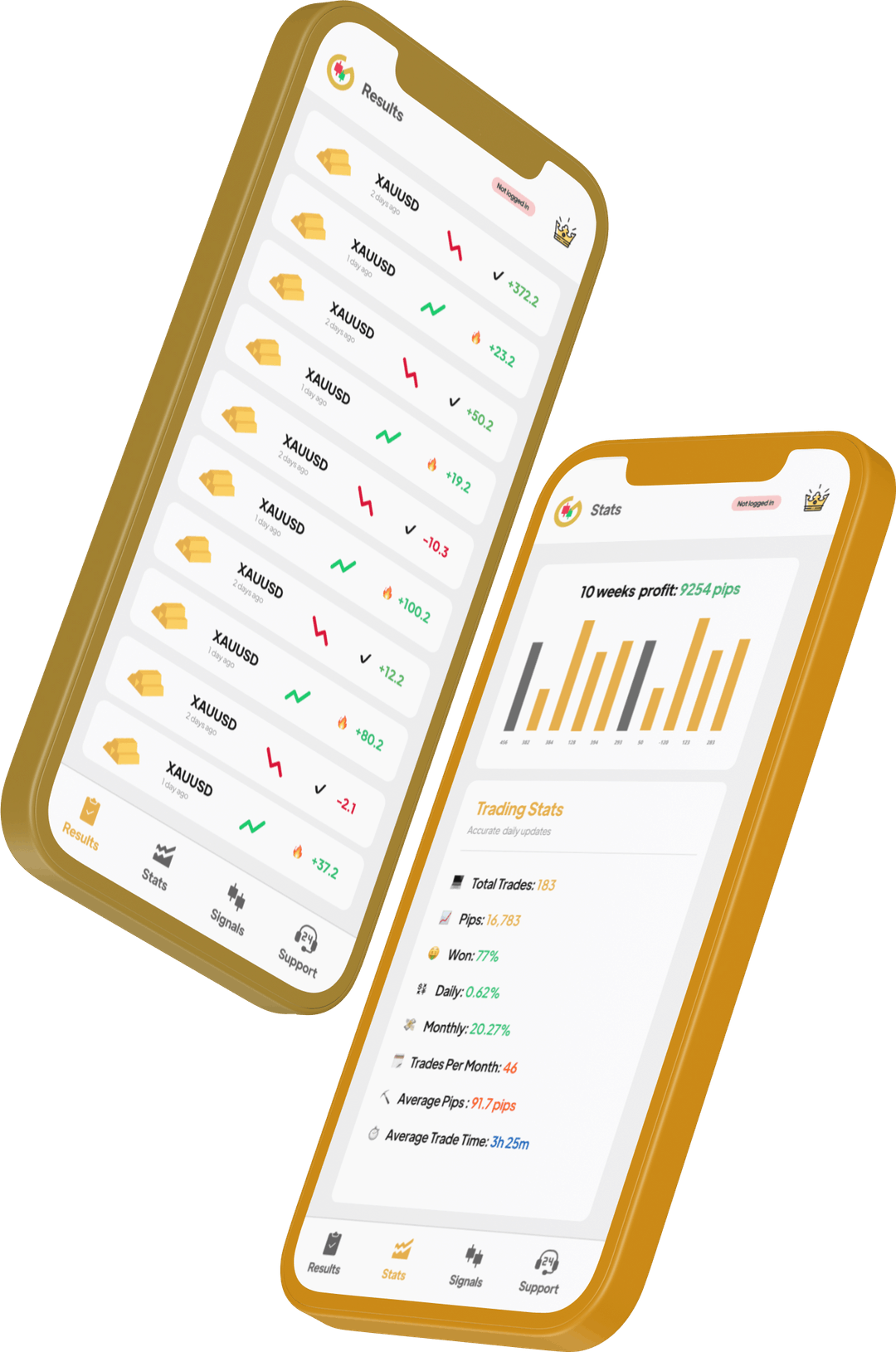
What is XAU/USD trading?
Gold trading explained
XAU/USD represents the price of one troy ounce of gold in US dollars. It trades 24 hours a day, 5 days a week on forex markets through brokers — no central exchange. Unlike stocks, you can trade gold in both directions: buy (long) when you expect prices to rise, or sell (short) when you expect them to fall.
Why trade gold?
- Highest daily volume of any commodity
- Large price swings = high profit potential
- Inversely correlated to USD — clear fundamental drivers
- Safe-haven asset during economic uncertainty
- Available on every major broker with tight spreads
- Can be traded with leverage for capital efficiency
What moves the gold price?
Understanding these drivers is essential for anticipating gold price direction.
US Dollar (DXY)
Gold is inversely correlated to the dollar. When USD weakens, gold typically rises. Watch DXY for directional bias.
Interest Rates
Higher US real yields = lower gold. When the Fed cuts rates or signals dovishness, gold rallies.
Geopolitics
Wars, elections, trade conflicts — uncertainty drives capital into gold as a safe haven, pushing prices higher.
Central Bank Buying
BRICS nations accumulating gold at record pace. This creates structural demand and a floor under prices.
Inflation
Gold is an inflation hedge. When CPI rises faster than expected, investors buy gold to preserve purchasing power.
Stock Markets
When equities crash, money flows to gold. When stocks rally strongly, gold demand can soften temporarily.
Watch gold trading in action.
See professional XAU/USD signal execution on GoldSniper.
Gold trading strategies.
Trend Following
Identify the higher-timeframe direction and trade with it. Use moving averages (50/200 EMA) for confirmation.
Breakout Trading
Wait for price to break key support/resistance with momentum. Enter on the break, SL below the level.
Range Trading
During consolidation, buy at support and sell at resistance. Works well in quiet Asian sessions.
News Trading
React to NFP, CPI, FOMC. Gold can move 200+ pips in minutes. Requires fast execution and wider stops.
Signal-Based Trading
Let GoldSniper analysts do the analysis. Receive entry/SL/TP, copy into your broker. Best for busy traders.
Scalping
Quick 5–30 pip trades on M1–M5 charts during London/NY overlap. High frequency, tight risk.
Protect your capital.
Risk management is more important than any strategy. Follow these rules religiously.
Never risk more than 1–2% per trade
If your account is $10,000, risk max $100–$200 per trade. This keeps you in the game through inevitable losing streaks.
Always use a hard stop-loss
No exceptions. Mental stops don't work. Set the SL in your broker before the trade is live. GoldSniper provides one on every signal.
Position size from risk, not greed
Calculate your lot size from your stop distance and risk amount. Never pick a lot size first — let the math decide.
Cut losers fast, let winners run
Move SL to breakeven after TP1 hits. Take partials at TP2. Let the rest ride to TP3. Never add to losing positions.
Live XAU/USD levels + signals.
Get auto-calculated support/resistance based on daily pivot points, plus live signals that fire when price approaches these levels. No more watching charts all day.
- → Daily pivot-based S1/S2/R1/R2
- → Signals fire at key levels automatically
- → Session-aware (London/NY overlap prioritised)
- → Lot size pre-calculated for 1% risk
Gold trading questions, answered.
How is the XAU/USD gold price quoted? +
XAU/USD is the price of one troy ounce of gold in US dollars. A broker's spot or CFD quote can differ from a gold futures contract because the product, spread and expiry differ. The timestamp and instrument identify which price a chart is showing.
How accurate are GoldSniper XAU/USD signals? +
GoldSniper maintains a 93% win rate calculated across all closed XAU/USD trades since 2018. This is verified publicly — every signal (wins and losses) is timestamped and logged in the app. The average winning trade captures 91.7 pips, with an average trade duration of 3 hours 25 minutes. We publish 4–8 signals per trading day.
What does a gold trading signal include? +
Every GoldSniper signal includes: exact entry price (or range), stop-loss level, three take-profit targets (TP1, TP2, TP3), suggested lot size based on 1% risk, and the trade direction (BUY or SELL). After entry, we send live management updates — SL adjustments, partial close instructions, and "move to breakeven" alerts.
What moves the gold price? +
Gold responds to changes in interest-rate expectations, the US dollar, inflation expectations, investment flows, central-bank demand and geopolitical developments. These drivers can reinforce or offset each other; no single factor explains every session.
How much capital do I need to trade gold? +
The amount of capital needed depends on the product, minimum position size, margin requirement and chosen stop distance. Calculate cash exposure from the actual contract specification and account currency. There is no universal starting balance that suits every broker or trading plan.
Which broker should I use for gold trading? +
Use a broker that supports your exact instrument and account jurisdiction. Compare its contract size, quote currency, spread, execution platform and trading hours. The app provides analysis and alerts; the broker handles trade execution.
What is the best time to trade gold? +
Active periods depend on the instrument, trading venue and economic calendar. London and New York activity often overlap with major releases. Local session times shift relative to UTC during daylight saving, so use the session's named timezone rather than one year-round UTC window.
Is gold trading risky? +
Gold is volatile, and leverage magnifies both gains and losses. A signal's stop distance and your contract's value per price unit determine position risk; daily dollar ranges are not fixed.
Start trading gold today.
Download GoldSniper free. Professional signals, no experience needed.